Medication Safety
Keeping Track of Your Medications
You are the most important participant in your own care. You should keep a list of all the medications you take, including those prescribed by your doctor and any over-the-counter medications you take as needed (for example Tylenol, Advil, allergy medications, cold medications, vitamins, herbal supplements).
Volunteers and Care Managers / Counsellors are not responsible for your medications, cannot handle your medications, nor can they provide medical advice.
Tips When Visiting Your Doctor
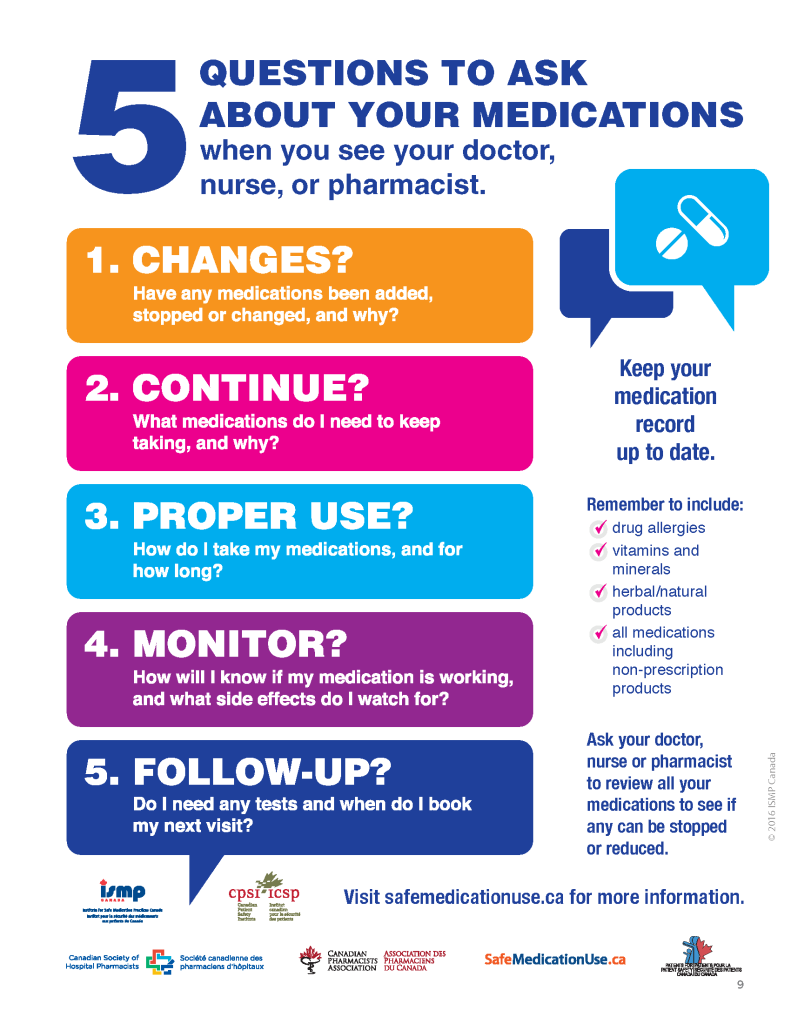
- Make a list of questions that you want to talk to your doctor about.
- Make sure your doctor knows about your allergies, any bad reactions or side effects you have had when taking medications.
- Bring your medication list with you. It should include all medications prescribed by your doctor as well as any over-the-counter medications.
- Make sure you understand why you are taking the medication. Do not be afraid to ask questions.
- Tell your doctor if you stop taking your medication.
Tips When Visiting Your Pharmacist
- Take the time to speak with your pharmacist when you pick up your medication(s). Ask questions.
- Make sure you know how and when to take the medication
- Make sure your pharmacist is aware of any allergies.
- Try to use the same pharmacy otherwise the pharmacist will not have your complete list of medications and this can lead to errors.
- Get a current list of medications from your pharmacy.
- Ask your pharmacist if you are eligible for a MedsCheck (an annual consultation with your pharmacist to review all of your medications).
Tips When Taking Your Medications at Home
- Take the medications as prescribed on the label.
- Keep all medications in their original containers.
- Report any side effects to your doctor or pharmacist.
- Alcohol (wine, beer, spirits) can negatively interact with medications and cause harmful side effects. Speak to your pharmacist or doctor about drinking alcohol while taking medications.